Last Updated: September 28, 2026
According to UK Weddings Taskforce industry research, the average wedding now involves guests travelling significant distances, which makes onsite accommodation one of the most valuable features a venue can offer. A luxury wedding venue with accommodation transforms a single-day event into a full weekend celebration, removing the stress of late-night drives and scattered hotel bookings. At Croydon Hall, we understand how this shift changes everything: guests relax, the timeline slows down, and the wedding feels less like a production and more like a gathering.
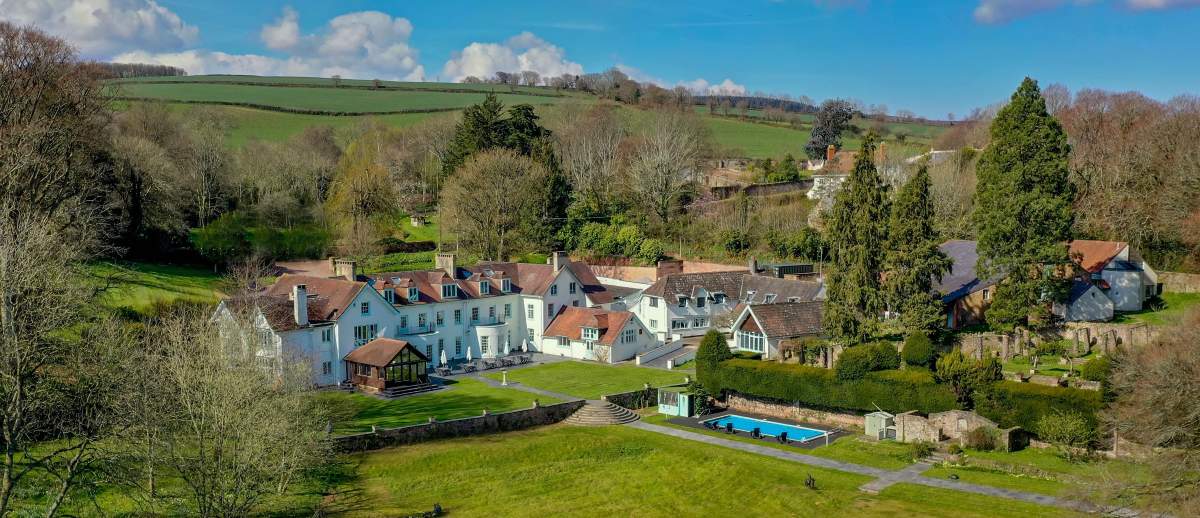
Croydon Hall set in Exmoor National Park.
Luxury wedding venues with accommodation fall into three broad categories: country house hotels and stately homes, coastal and island resorts, and boutique private estates. Each suits a different style of celebration, and understanding the trade-offs helps you shortlist faster.
These venues combine grand architecture with hotel-grade hospitality. A stately home or country house hotel typically offers a ceremony space, a dedicated reception venue, and a bridal suite, plus enough rooms to house a substantial portion of your wedding party. The advantage is turnkey service: staff, catering, and housekeeping are handled in-house. The trade-off is that you may share the property with other guests unless you book exclusive-use terms.
Coastal properties deliver scenic views and a natural sense of escape. Many offer bespoke packages that bundle accommodation capacity with dining and activities. For a destination wedding feel without leaving the country, these can work beautifully, though transport logistics for older guests need early planning.
A private estate or boutique hotel setting offers something the larger properties cannot: genuine privacy. These venues often provide exclusive-use hire as standard, meaning the entire property is yours for the wedding weekend. The trade-off is that some operate with smaller teams, so you may need to bring in external wedding suppliers for certain elements.
Venue Type | Best For | Typical Capacity | Exclusive Use |
|---|---|---|---|
Country house hotel | Full-service celebrations | Medium to large | Often optional |
Coastal/island resort | Destination-style weddings | Medium | Sometimes |
Boutique private estate | Intimate, private gatherings | Small to medium | Usually standard |
Exclusive use wedding venues with accommodation give you the entire property for your celebration, with no other guests, events, or interruptions. In practice, this means your wedding weekend itinerary can run on your schedule, not the venue's.
Wedding venue accommodation capacity is the number of guests who can sleep onsite, and it rarely matches your total guest count. A venue might host 150 for the reception but sleep only 60. The gap is where planning gets real.
Start by categorising your guest list:
A venue that "sleeps 75" is not the same as a venue with 75 bedrooms. That figure usually counts bed spaces across a mix of doubles, twins, singles and sofa beds. A property might sleep 75 if several rooms are family rooms with two doubles plus a sofa bed, but that forces you to decide who shares and who gets the sofa.
Work it out in three steps:
A room block is a held allocation of rooms for your guests at an agreed rate. At a fully residential venue, the block is usually the whole property, but the mechanics still matter:
Say you are inviting 120 guests and 90 need to stay. The venue has bedrooms sleeping 70. You block all rooms for the must-stay list (wedding party, immediate family, elderly relatives), which covers 70 guests. The remaining 20 guests go into a courtesy block at a nearby hotel, held until a specified date. You publish both the venue booking link and the hotel code on your wedding website, with a clear cut-off date.
Choosing a wedding venue with accommodation comes down to three tests: does the capacity fit, does the exclusivity match your vision, and does the logistics work for your guests? Get those right and the rest follows.
Three things separate a good venue choice from a great one, and most guides skip all three. This section treats each as an audit you can actually run, not a box to tick.
A country house with centuries of history may have steps, narrow doorways, uneven grounds and bedrooms up a staircase. Under the Equality Act 2010, venues have a duty to make reasonable adjustments for disabled guests. Many venues publish accessibility information online, but the quality varies enormously.
UK government guidance on accessible venues and reasonable adjustments
More couples now ask about energy sources, food sourcing and waste, and luxury venues are responding. But "eco-friendly" is unregulated marketing language, so ask for specifics:
If your dog is part of the family, confirm whether the venue welcomes pets in the bridal suite or guest rooms, and under what conditions. Ask specifically:
Planning a residential wedding means juggling capacity, exclusivity, and logistics all at once, and the details that trip couples up are rarely the obvious ones. Croydon Hall offers exclusive hire of a restored country house estate, accommodation for up to 75 guests across the property, and versatile indoor and outdoor spaces for weddings, retreats, and celebrations. Get started with Croydon Hall and secure a wedding weekend your guests will talk about for years.
Onsite accommodation removes the need for late-night travel and lets your celebration run across a full weekend rather than a single afternoon. Guests can get ready on site, stay for the evening reception and join breakfast the next morning. It also simplifies logistics for elderly relatives, young families and anyone travelling from a distance. Many couples find the whole event feels more relaxed and cohesive when everyone is based in one place.
Capacity varies widely. Capacity varies widely. Some venues offer a mix of main-house rooms, converted outbuildings and cottages, so the total accommodation capacity often exceeds the ceremony guest list. Always ask for the exact room breakdown, including bed configurations and whether any rooms share bathrooms, before you commit.
Exclusive use means you have the entire estate to yourselves, with no other guests or events running alongside yours. For luxury weddings this usually translates into greater privacy, more flexibility over timings and a stronger sense of occasion. It also makes it easier to personalise suppliers, décor and catering. The trade-off is cost and availability, since exclusive hire often requires booking further ahead.
Check the accommodation capacity against your guest list, confirm what is included in the venue hire fee, and ask about cancellation and date-change terms. Visit in person to assess accessibility, parking and the quality of the rooms. Ask whether you can bring your own suppliers. Request a full written quote so nothing is left to assumption.
